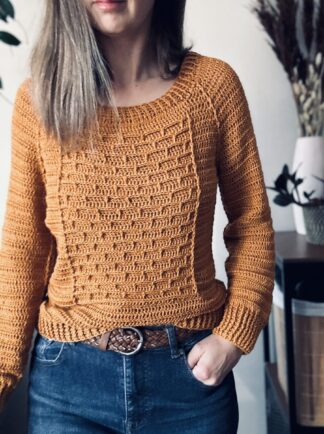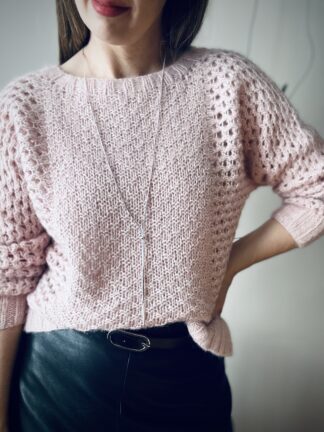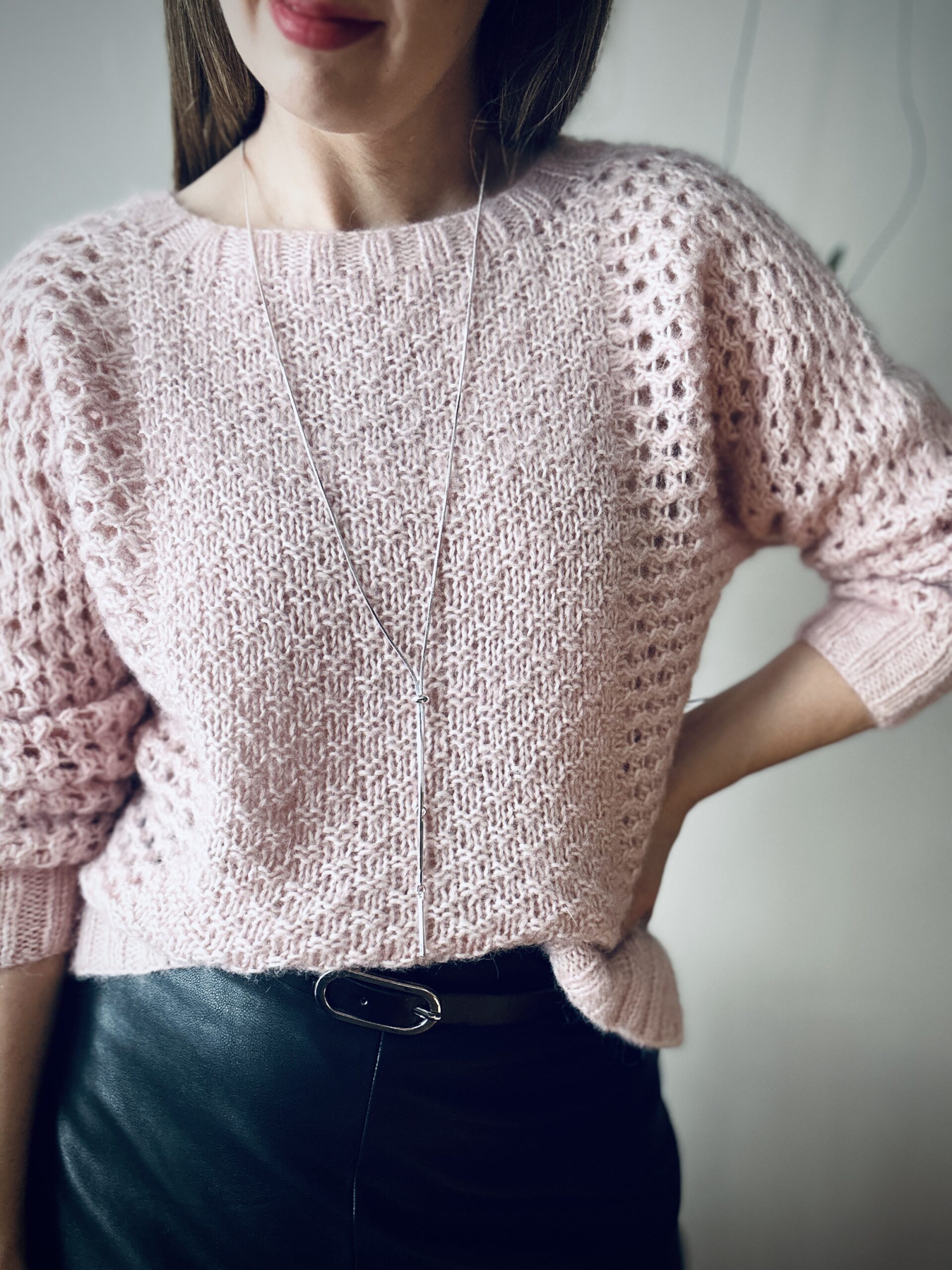
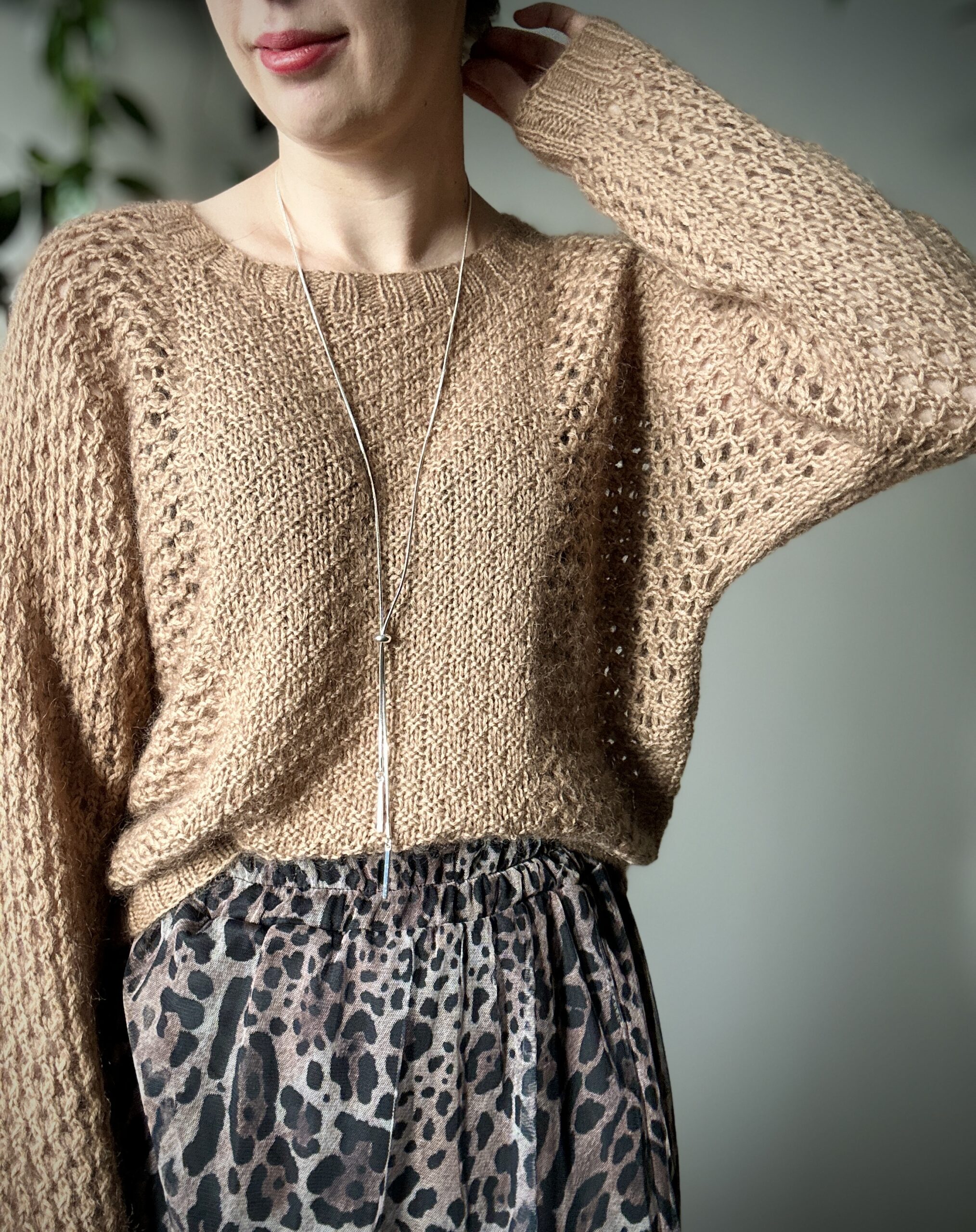
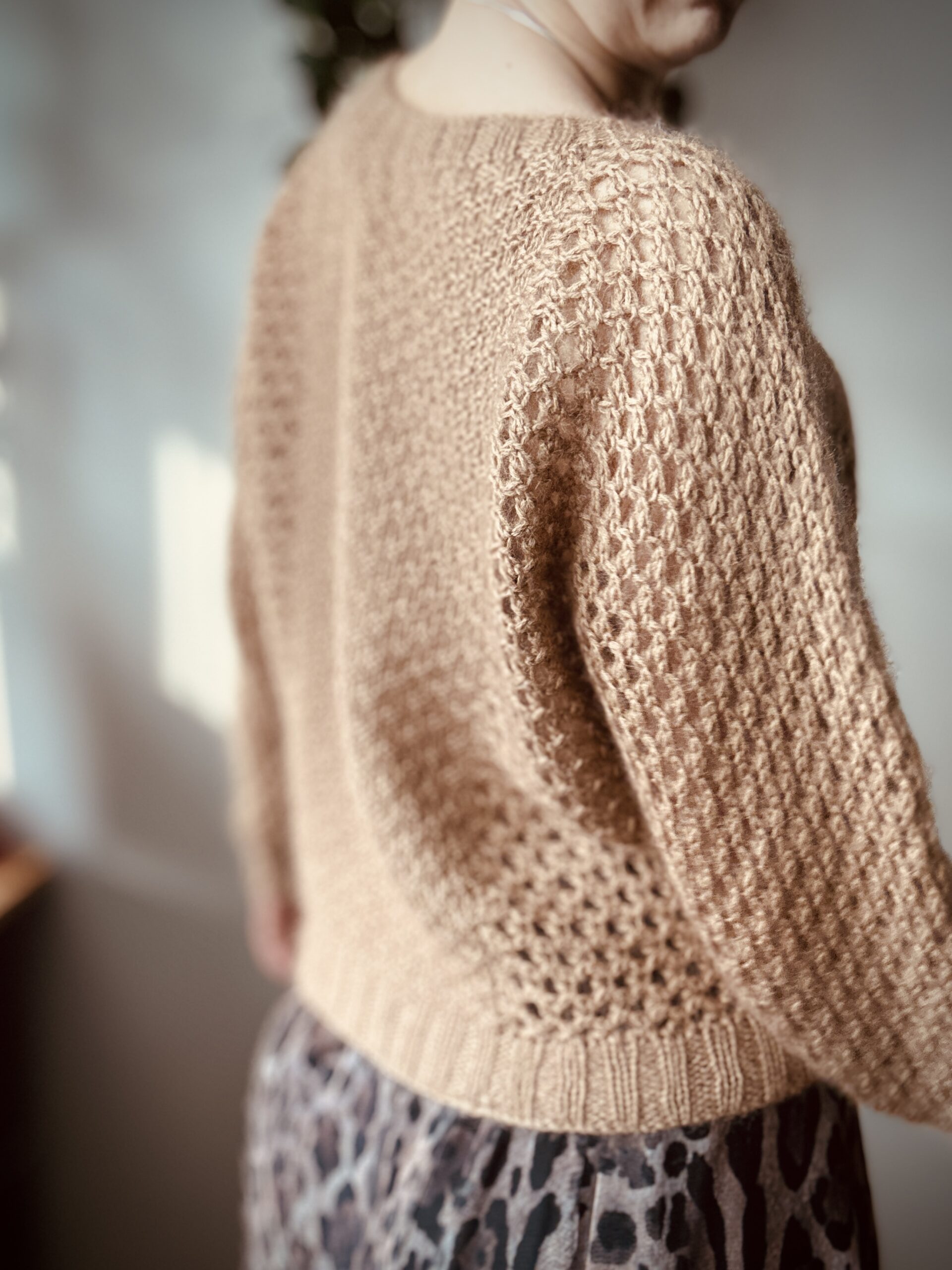
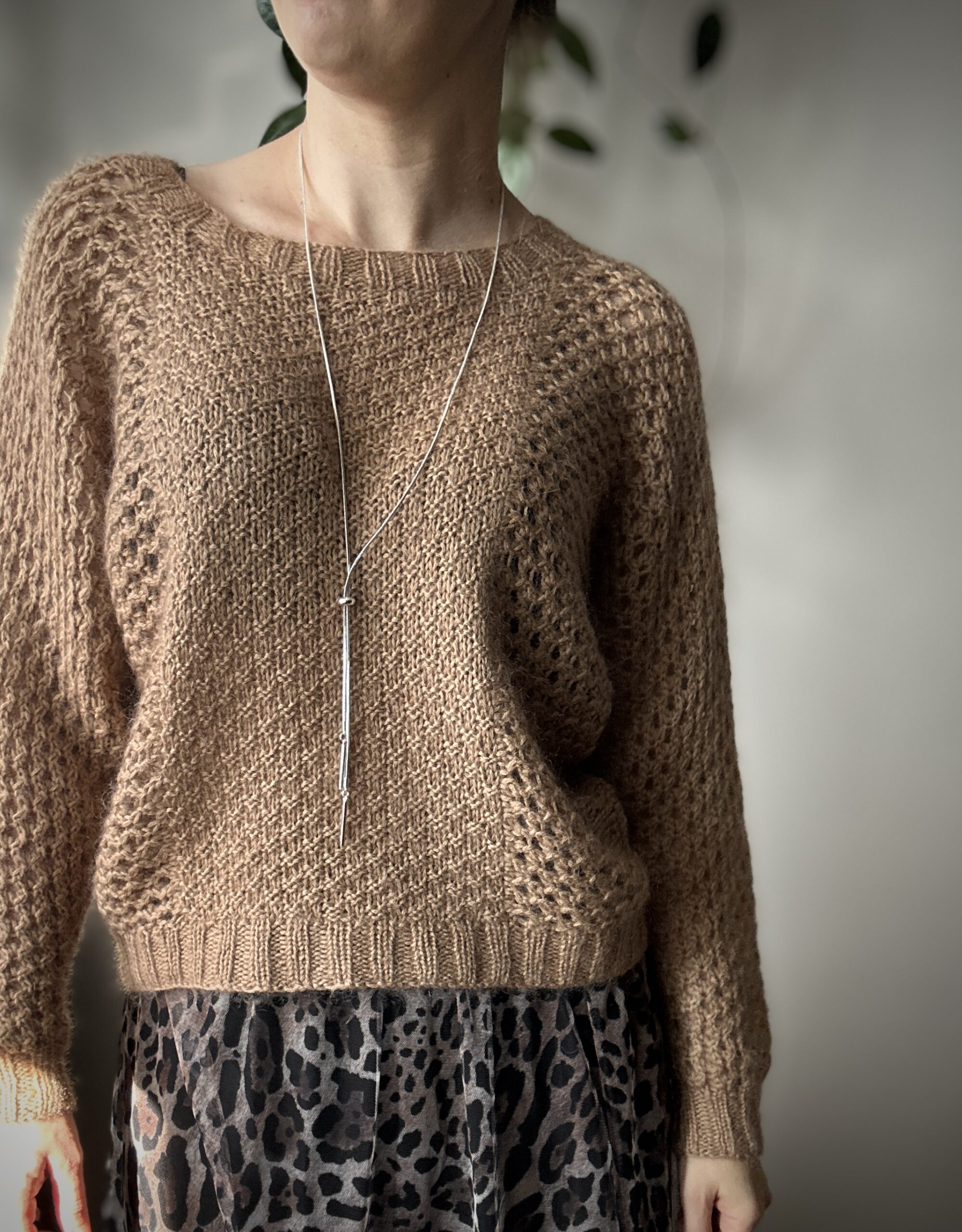
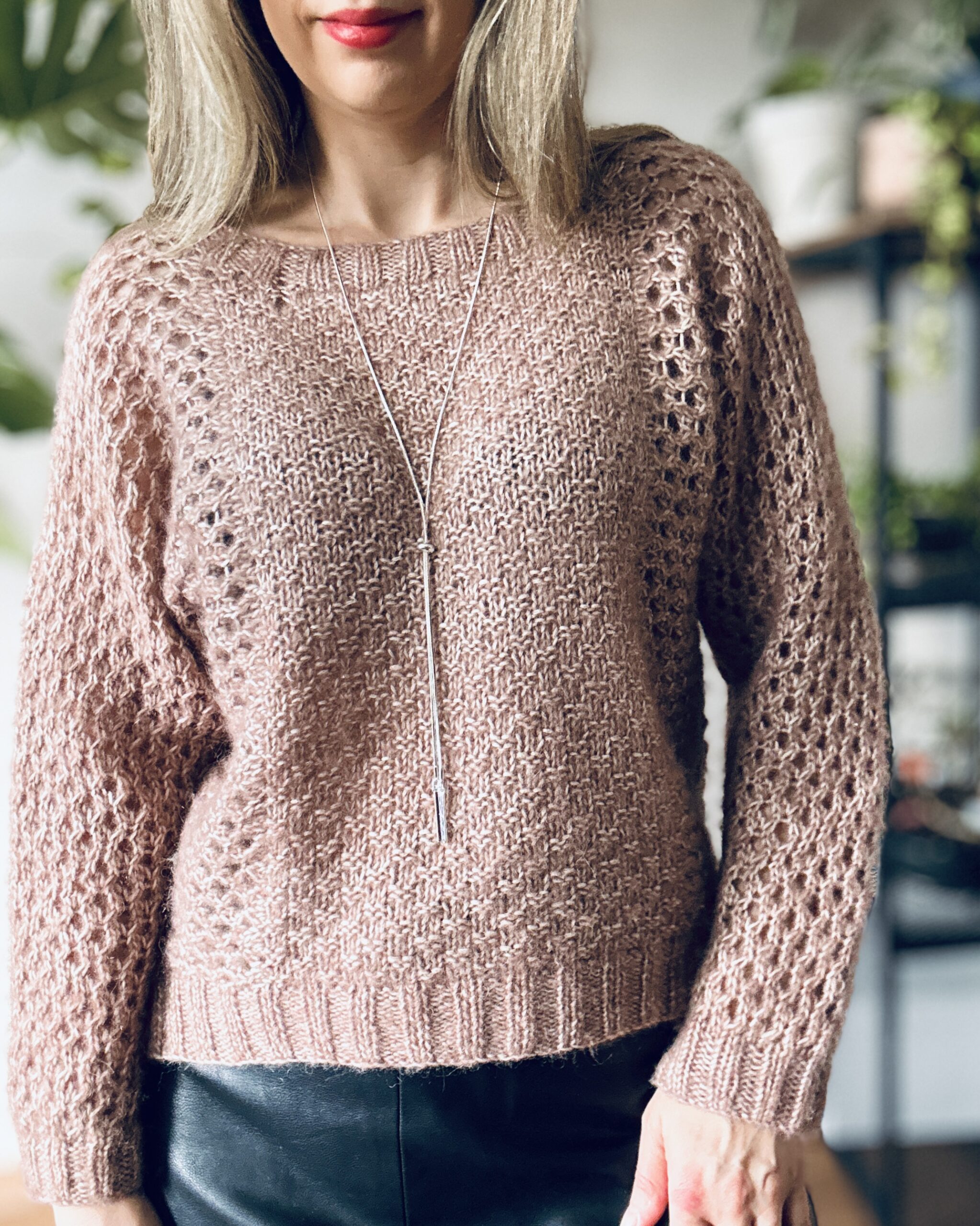
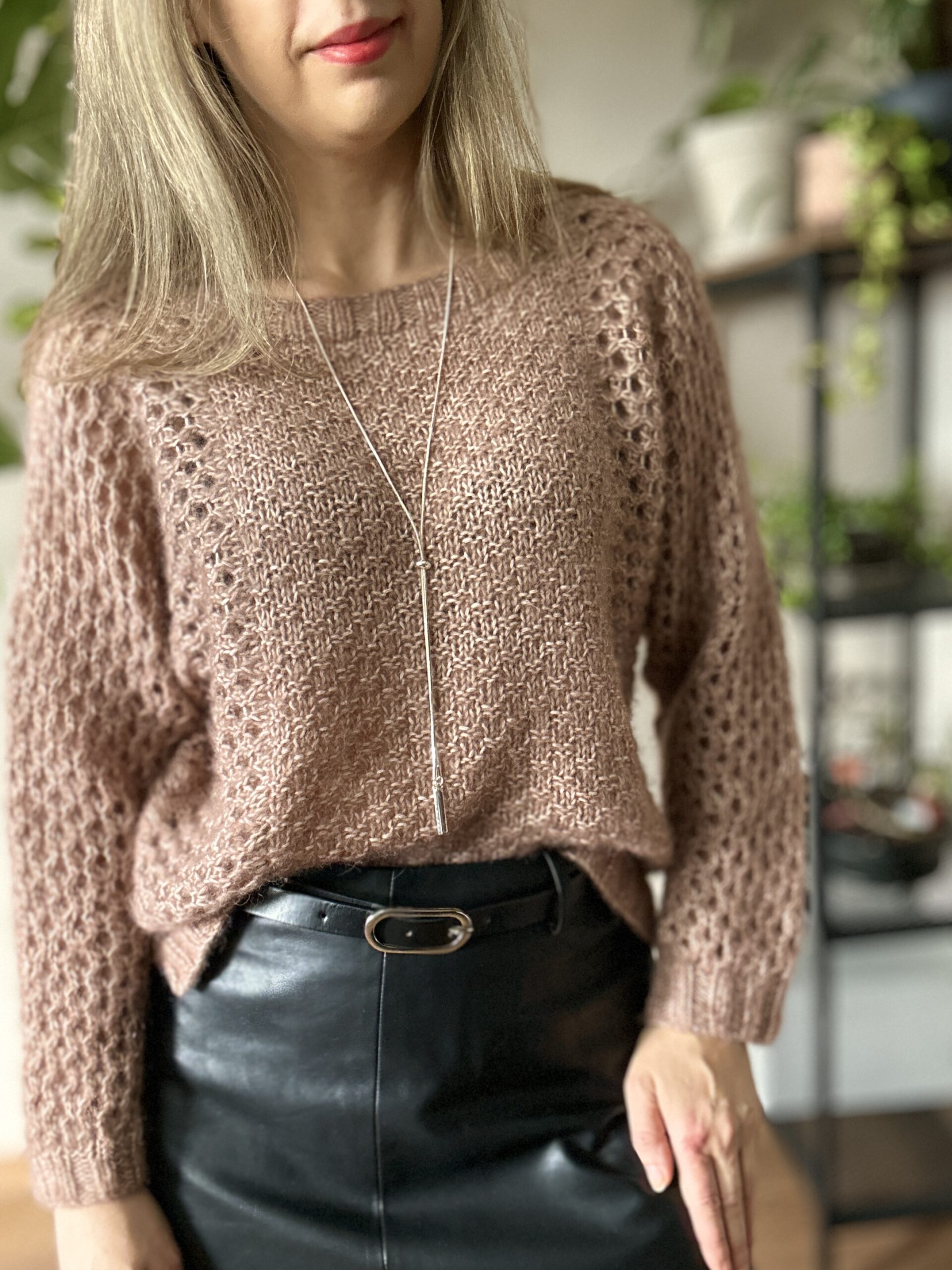
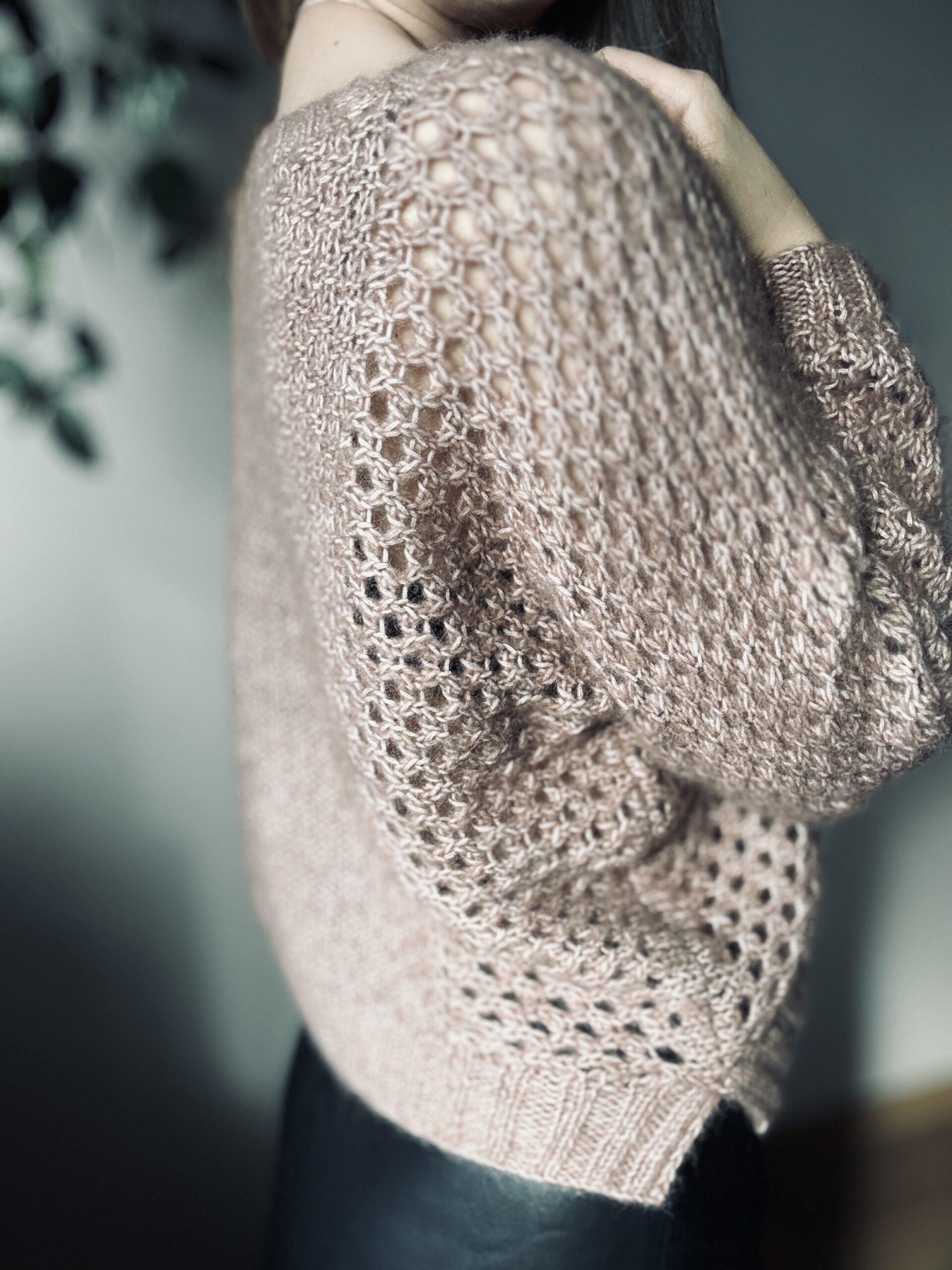
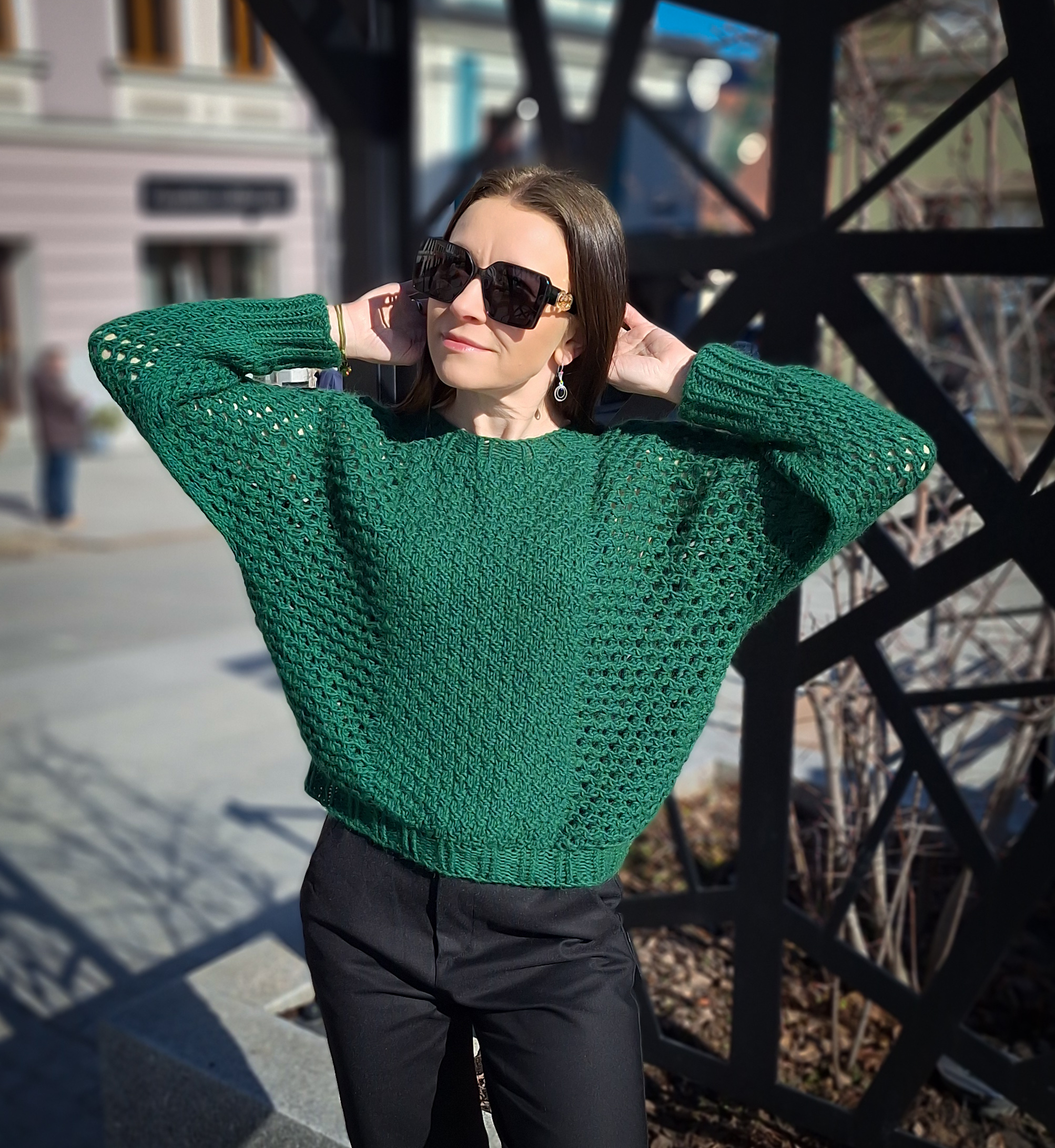
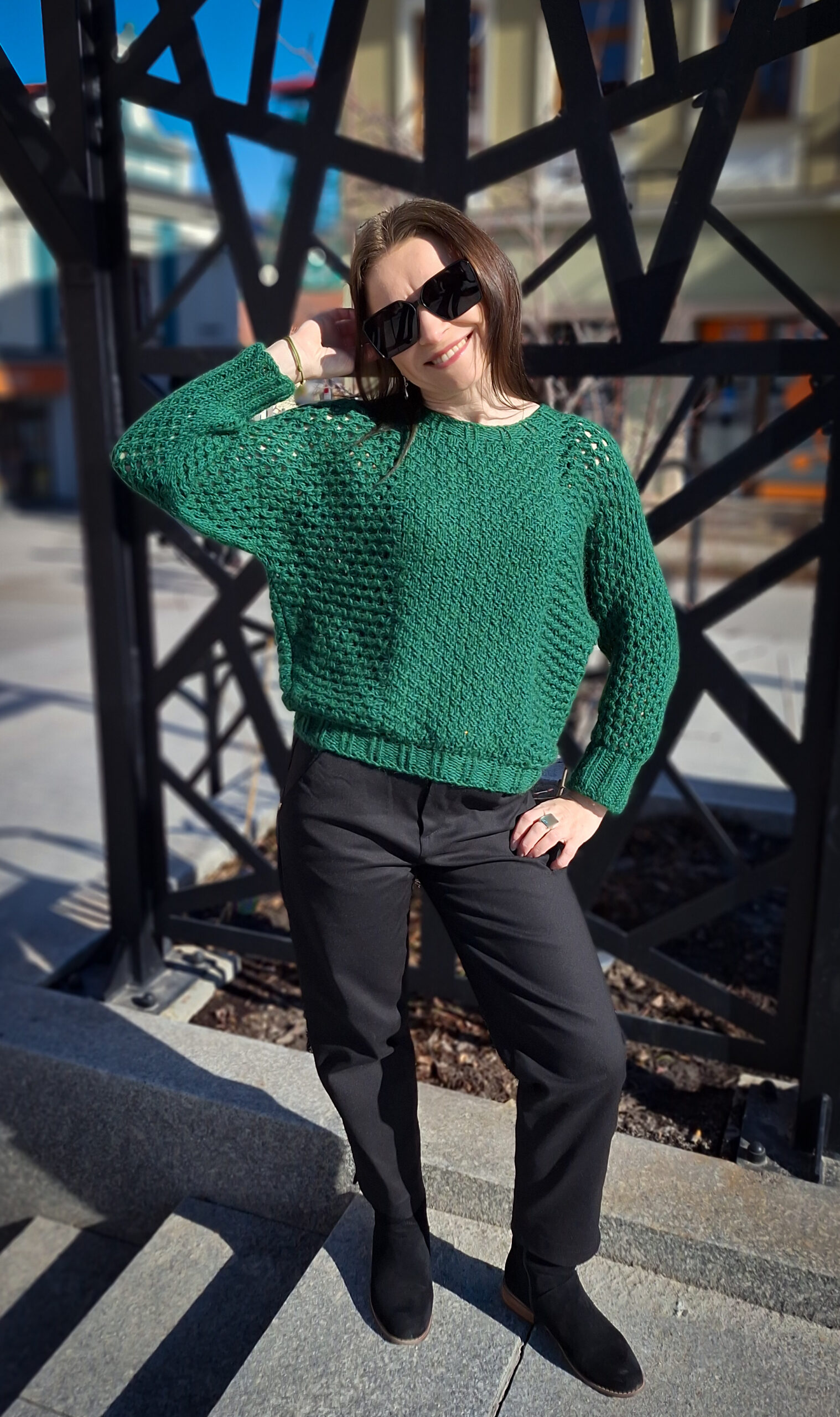
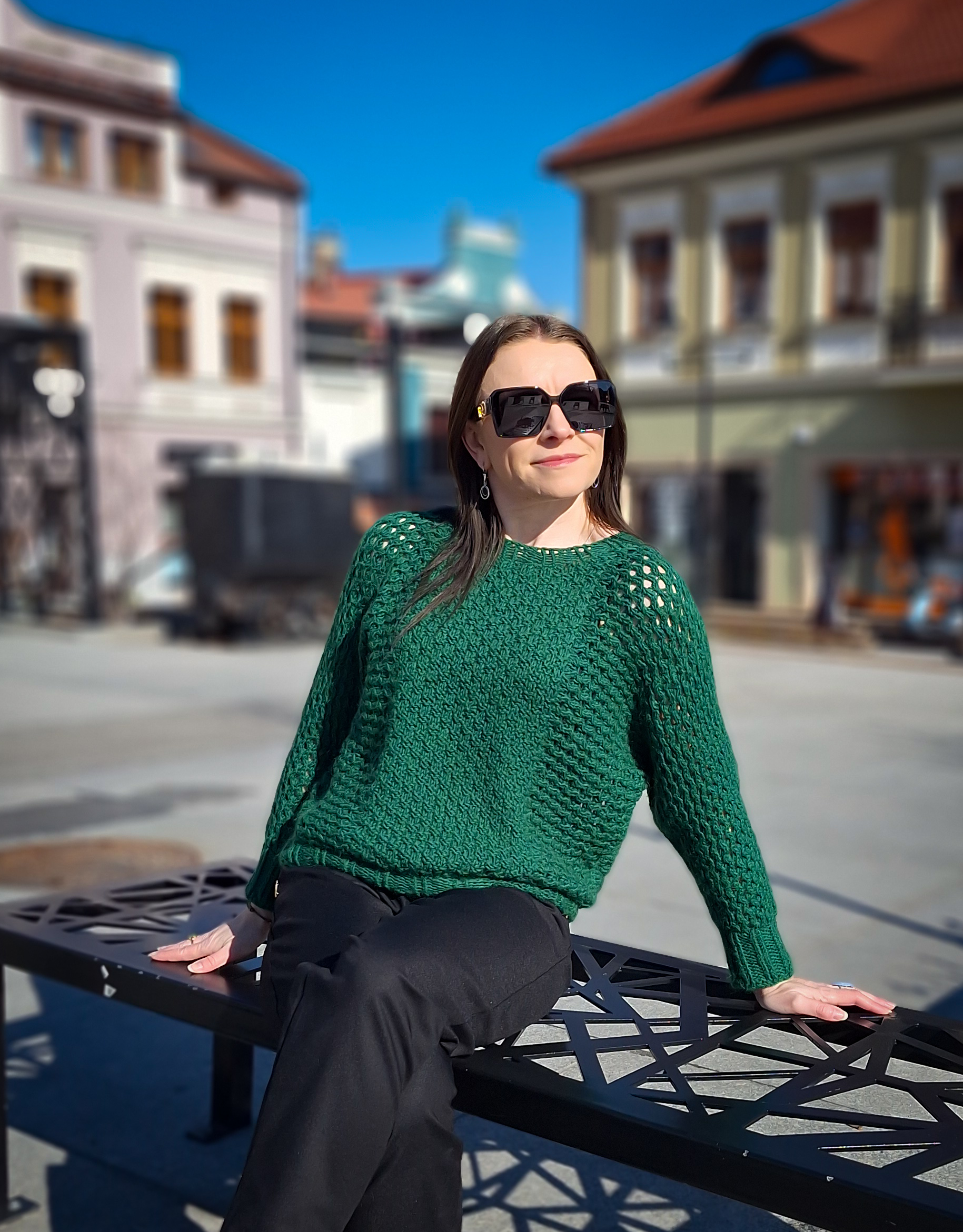
Opis
Rozmiary
(S, M, L) (XL, 2XL, 3XL)
Projektowany z luzem konstrukcyjnym ok. 20 cm względem obwodu biustu (positive ease).
Próbka
15 oczek × 24 rzędy = 10 × 10 cm
(ścieg panelu centralnego, po praniu)
Włóczka
Zoya Furora Yarns (50 g / 125 m)
Zużycie:
(6, 7, 7) (8, 8, 9) motków
Można użyć włóczki dającej próbkę 15 oczek = 10 cm po praniu
np. Kokonek Pure 4 nitki plus drops Kid Silk
Druty
5,5 mm – część główna
mniejsze – ściągacze
Konstrukcja
Sweter wykonywany jest etapami:
• dwa panele centralne (przód i tył)
• dobierane boki przerabiane w poprzek
• modelowanie rzędami skróconymi
• rękawy przerabiane w okrążeniach
• wykończenie ściągaczami
Sizes
(S, M, L) (XL, 2XL, 3XL)
Designed with approximately 20 cm of positive ease relative to the bust circumference.
Gauge
15 sts × 24 rows = 10 × 10 cm
(central panel stitch pattern, after washing)
Yarn
Zoya Furora Yarns (50 g / 125 m)
Yarn requirements:
(6, 7, 7) (8, 8, 9) skeins
A yarn that gives a gauge of 15 sts = 10 cm after washing may be substituted.
Needles
5.5 mm – main body
smaller needles – ribbing
Construction
The sweater is worked in stages:
• two central panels (front and back)
• side sections picked up and worked sideways
• shaping with short rows
• sleeves worked in the round
• finished with ribbing